


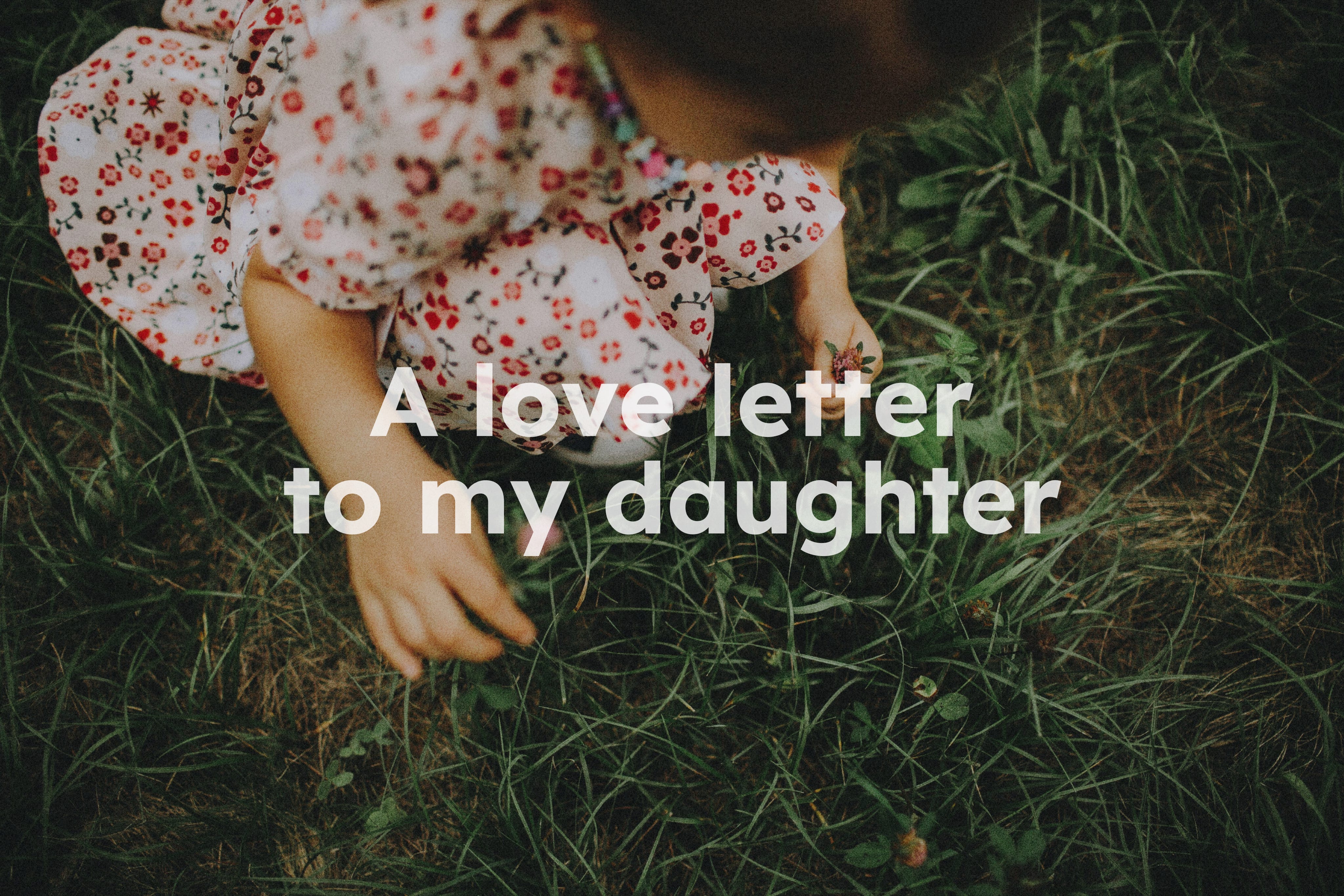
I got my daughter the book “Good Night Stories for Rebel Girls” for Christmas. It tells the stories of women scientists, artists, activists, adventures through time. We read about a few women every night and she asking when they were born, when they died. “Was that a long time ago?”
She’s realizing that history exists. That the world changes. That there was a “back then” that was different from now.
A few days later, she asked her grandma: “What was something that exists today that didn’t exist when you were a kid?”
They started talking about computers and smartphones.
“So adults didn’t work back then?”
Hi, I’m Emma. I think out loud about AI, work, and the futures we’re building. It’s messy. You’ve been warned.
A week later, we’re lying on top of this giant snow pile left over from plowing the driveway, just looking at the stars.
And she goes: “What will exist when I’m grown up that doesn’t exist today?”
I don’t know how to answer that. So I just say “I don’t know, it’s up to us to find out.”
She thinks for a second. “Then I’m going to be a scientist.”
“What kind of scientist?”
“I don’t know yet. I just want to find out new things. But I think I’ll travel to the moon.”
She didn’t ask if it was possible, or if girls can go to the moon too. Just stated it as a fact. I’ll travel to the moon.
When I was a kid, I wanted to be a sports journalist. I brought my pink notebook to our local football team’s games and wrote about what I saw. I admired the commentators - they were so knowledgeable and quick, always had something interesting to say. But there were no women doing it. Not that anyone told me I couldn’t. I just... didn’t see it.
I never consciously thought “I can’t be a sports journalist because I’m a girl.” But the redirection happened quietly anyway.
But this girl just says “I’ll travel to the moon.” Not a question.
The book I gave her is supposed to teach her that girls can do anything. But she doesn’t have a “too” yet. She doesn’t need the book to tell her she’s allowed. She just knows people do things, and she’s a person, so she can do things.
The book instead amplified her obsession with understanding time. She ask me when were they born? Is this person still alive? When did they die? Was that a long time ago? What existed before computers? What will exist when she’s grown?
We’re watching a football game. “Do these people really exist? Is this happening now?”
We see a movie. “Is this real or pretend? Has this happened in real life?”
She’s building her framework. Learning to tell the difference between what happened and what was made up. Between now and then. Between real people and characters they play.
She has watched Pippi Longstocking, a classic Swedish kids show from 1969, multiple times. Then the actor who played Pippi showed up in a new show we were watching - now 65 years old. I didn’t even notice it was the same person until someone pointed it out. But once I knew, I couldn’t unsee it.
I mentioned it to her while we were watching. “That’s the same person who played Pippi.” She got quiet for a moment, thinking about it. But Pippi was just a kid on our screen the other day? This is an old lady. It doesn’t make sense.
She’s sorting it all out. Fiction, reality. Past, present. Learning the cues.
But she’s learning them just as they’re starting to break.
If you’re a parent, you’ve probably felt this. Trying to teach your kid something you learned as a rule, only to realize the rule doesn’t work anymore.
Because with AI, those categories collapse.
Learning rules that no longer work
Is a conversation with AI “real”? It’s happening, but there’s no person on the other end. Is an AI-generated image “real”? It looks real, but it never existed. Is AI-written text “real”? The words are there, but where did the thinking happen?
She’s building trust right now. Trust in what she sees. Trust in what people tell her. Trust that the world makes sense in consistent ways.
And I’m watching AI question every shortcut I used to build that trust for myself.
She could see a video of me saying something I never said. She could read an article that sounds authoritative but was generated in seconds. She could look at a photo that documents something that never happened.
I’ve argued publicly that I don’t care if something is made with AI. What matters is the final thing. But that assumes you know what matters about the final thing. And how do you know that without understanding where it came from?
She’s asking “Is this real?” about everything right now because she’s learning the rules. But what happens when there are no rules? When “looks real” doesn’t mean anything? When the markers she’s working so hard to learn become meaningless?
But then again - things have always been fake. People have always had bad intentions. Propaganda existed before AI. So did photo manipulation. I’m pretty sure the human ability to lie isn’t a result of the industrialization. AI didn’t invent deception. It just made it easier.
And it made other things easier too.
Someone who couldn’t express themselves clearly can now articulate complex thoughts. A kid with an idea can create something that would have taken a team of professionals. A person with dyslexia can write without the barrier that held them back. Someone curious can explore subjects that were previously locked behind expertise or access.
AI amplifies what was already there. The person who wants to deceive can deceive more convincingly. The person who wants to create can create more easily. The person who wants to help can help more effectively. The person who wants to learn can learn faster.
So the question isn’t new. It’s the same it’s always been: how do you navigate a world where some people tell the truth and some people don’t? Where some things are what they appear to be and some things aren’t?
She hasn’t encountered AI yet. But she will. And to her it won’t be new, scary, mind-blowing. It will just be how the world works.
She just has to get better at asking than I ever had to.
What I actually want to protect
Watching her figure this out, I keep noticing something: it’s not the answers that light me up. It’s when she asks “why does it work like that?” When she tries something just to see what happens. When she refuses the first answer and keeps poking at it. When she questions why things work the way they do.
Of course I want her to be kind, empathetic, a good friend, and all of that.
But what I actually value? Curiosity. Over almost everything else.
Staying curious when things get confusing, when the cues stop working, when you can’t tell what’s real... that’s the skill that matters.
I can’t teach her shortcuts I know anymore. I can’t say “animated means fake, live action means real” or “if you can see it, it happened” and be done with it.
But I can show her something more important: how to stay curious.
The same curiosity that made her think about Pippi growing up. The same curiosity that made her ask what existed before computers. The same curiosity that made her want to be a scientist before she even knows what kind.
The danger isn’t that she’ll encounter fake things. It’s that she’ll learn to stop asking. That she’ll accept easy answers because the real ones are too messy. That she’ll give up on “why does it work like that?” because it’s easier to just accept that it does.
Today she asked me: “Do you know how many preschools there are?”
“In the whole world? I have no idea.”
My head started spinning. What counts as a preschool? How is it classified in other countries? Here daycare and preschool are the same thing, but I think preschool is for older kids in the US. I don’t know. How many kids are there in the world? I started doing some rough math in my head.
“What? Why haven’t you learned that?”
Good question. Why haven’t I learned that? It never crossed my mind to ask, but I think I can do a pretty good estimation. Let me tell you about this thing called AI..
Kiddo, you’ll never know a world without AI. Just like I never knew one without computers. Just like your grandma never knew one without TV in every home.
What might feel normal to you is completely new to me. And somewhere between completely new and completely normal, we forget it was ever questioned.
But you? You’re still asking.
And that’s what I want to protect. Not your certainty about what’s real, but your refusal to stop questioning. Your need to understand how things actually work. Your certainty that you’ll travel to the moon, stated as simple fact.
That curiosity, that’s what I want to give you. Not certainty, but the drive to keep figuring it out, even when it gets confusing.
(And sorry for making your thoughts the center piece of a text I posted on the internet, I couldn’t help myself because there is nothing I love more than watching you trying to make sense of the world.)
How are you explaining “real vs. pretend” to the kids in your life? Or are you still trying to figure it out for yourself?
Support the Work
If this helped you see something differently, you can support the work. One-time tip, no subscription, just a digital coffee. ☕️ Support on Ko-fi
I’ve never asked my children what they want to be when they grow up. It can suggest that as adults they are supposed to become someone else… But what truly interests me is who they already are, and how they can unfold their capacities – now and in the future.
That question often feels like a clumsy attempt to gently push a child toward roles that are considered socially useful. Far too early, because we don’t even know what the world will look like by the time they grow up.
“A doctor? A teacher? An astronaut?” – adults ask hopefully. And the child answers by going off to play – because right now, they already are all of these.
Children are masters of pretend play.
And perhaps this is both the magic and the danger of AI – that adults, too, can now engage in role-play.
English is not my native language… so I wrote this comment in my mother tongue and asked ChatGPT to translate it. Let’s play that this is enough – that it’s not the tool that matters, but the intention. Thoughts take shape, connection happens. Maybe something positive is added to the world.
There is nothing wrong with pretend play.
The question is: what kind of world are we imagining – and playing into being?
What we need to strengthen in children is what is true and real, so that later, they have the moral strength to recognize what is not.
Let’s play…
Let’s play that AI can be our companion not only in deception, but also in building a more beautiful, more truthful world.🌱
My daughter said she wouldn’t go to a phone shop because she doesn’t trust it.
“They use those awful AI-generated people in their ads, you can tell from the fake smiles,” she said.
I guess kids are developing a new kind of literacy.
It made me think.
(She loved Pippi Longstocking as well, watched the movies multiple times when she was smaller, and we have read most of the Astrid Lindgren books.)