


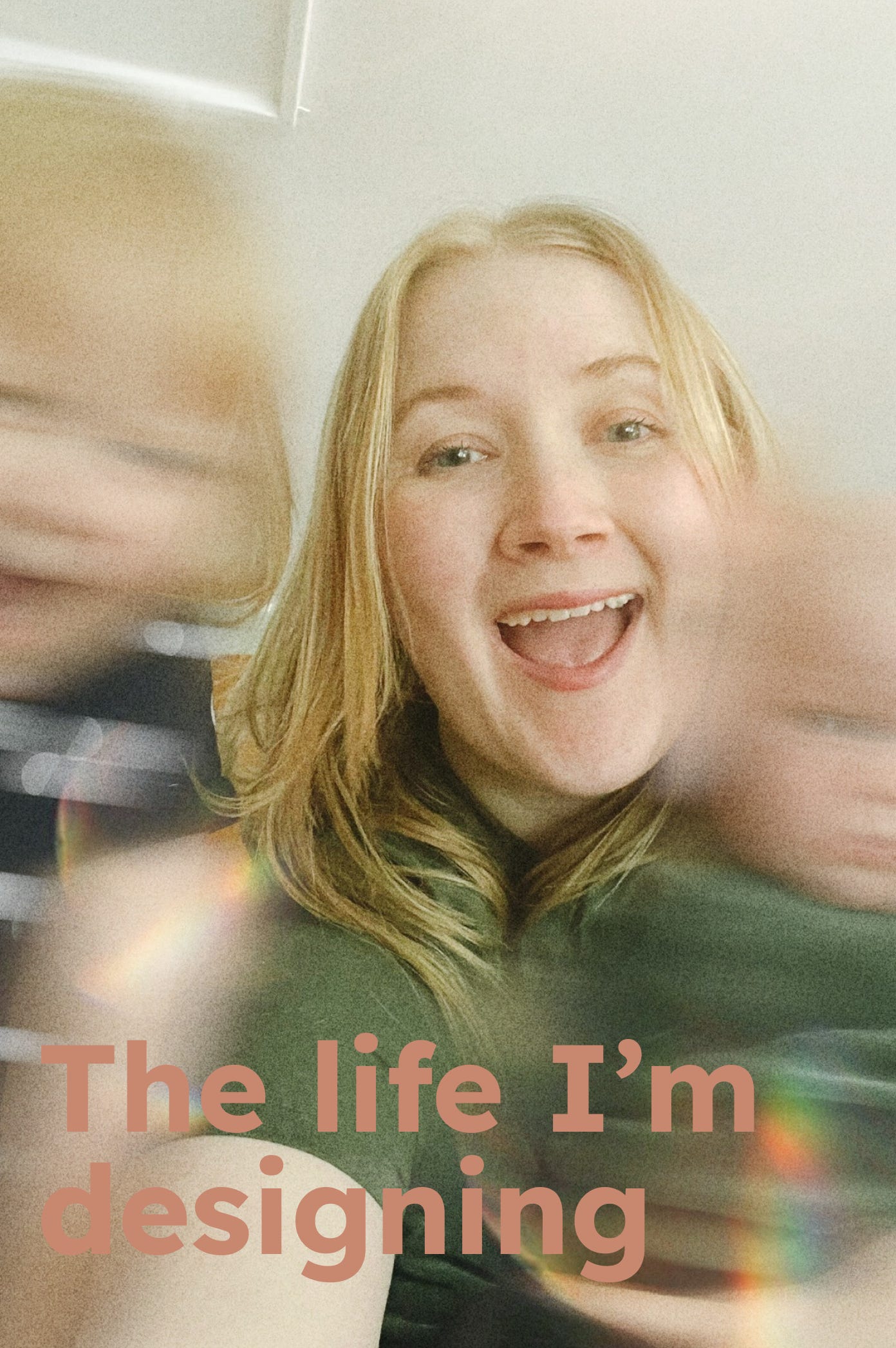
Hi! I’m Emma.
If we haven’t met yet, this is the story behind (Over)Thinking Out Loud — how I learned to make peace with how my brain works, and why I decided to write about it here.
I’ve been writing about AI, work, and overthinking for a while now in essays, notes, and small experiments. I’ve been overthinking it for much longer.
Here, I explore how to use AI to externalize thinking and design work that fits your own mind so you can do fewer, better things.
I write in public because the questions AI raises about how we work, what we create, and what actually matters are too big to figure out alone. Sharing my process helps me see my own thinking more clearly and invites others to do the same. It’s a small experiment in what AI could be for: not speeding up, but slowing down enough to think with intention.
My background is in UX and product design. I have an M.Sc. in Interaction Design and Media Technology (HCI), which means I’ve spent years studying the gap between how technology is designed and how people actually use it. I’ve built, coded, and designed, and now work across product and operations at an early-stage startup. I’m also a mom of two in Stockholm.
My brain works in bursts, not marathons. My process is non-linear, more loops than lines. I care deeply, or not at all. I follow my curiosity just to see where it leads. I need to understand the whole picture before I can focus on the details, and that rhythm keeps me circling the same question again and again: why?
Why build this? Why do people behave this way? Why does any of it actually matter?
That question used to paralyze me. If I couldn’t explain the reason behind something, I’d freeze, caught between wanting to understand everything and needing to deliver something. The overthinking wasn’t helping me work better. It was keeping me stuck.
When I started experimenting with AI, something shifted. It gave me a way to think out loud, to explore my loops instead of fighting them, to notice patterns in how I reason and where I get stuck. My curiosity about why kicked in immediately. Why did it give that answer? What would happen if I changed my wording, added context, asked a different question?
To get something useful back, I had to explain myself with painful clarity—what I wanted, what I meant, what I was really asking. There was no trick to it. I just kept showing up, trying to describe my thinking a little more clearly each day, asking why over and over until something real surfaced.
Somewhere in that repetition, in the refining and small clarifications, I stopped trying to fix how I think and started understanding it.
More than anything, AI helped me accept how I’m wired. Not because I became more productive, but because I stopped trying to fit into systems built for someone else’s brain. I started designing for mine instead. Obvious in hindsight. Transformative in practice.
My core belief about AI
Every major technological leap has reshaped what it means to live and work. Fire let us gather and stay awake together, the printing press spread ideas faster than they could travel before, electric light stretched the day, and the internet collapsed distance entirely. Each breakthrough changed what was possible, but also what was expected. We filled the extra capacity with more to do, more to make, more to manage. Every tool promised to save us time, and somehow we kept finding ways to spend it working.
Now we have AI, a tool that can write, design, code, and create faster than we ever could. It can automate and amplify almost anything we can think of. Which returns me to the question that never leaves me: why? Why do we want machines to do more and go faster? Is it so we can do more and go faster, or so we can finally pause long enough to ask what’s actually worth doing?
We can use AI to keep accelerating, producing, optimizing, and managing at higher speed, solving problems mainly so we can make more of them. Or we can use it to create space. To think. To care. To rest. To make fewer but better things. To solve problems that matter. To give more people the chance to work where their creative spark actually lives.
I argue for the second every time.
Because if every new tool just helps us run the same race faster, what’s the point of progress? AI could help us slow down, not by rejecting progress but by redefining it. Maybe progress isn’t about doing more at all. Maybe it’s about needing less, and finally having time to decide what’s worth our attention. A wild idea that also happens to feel like relief.
Where the “thinking out loud” part comes from
In UX research, there’s a method called “think aloud.” You watch someone use a product and ask them to narrate their thinking in real time. “I’m clicking here because I think… wait, that didn’t work. Okay, maybe this button? Hmm, I expected that to…”
The goal is simple: externalize thinking. Make the invisible visible.
Once you can hear someone’s reasoning process out loud, you can see exactly where things break down. Where their mental model doesn’t match what the system expects. Where the confusion actually lives. Great news for design. Also great news for our own brains.
I first became fascinated by that idea while writing my master’s thesis. I was researching augmented reality, back when it still felt mysterious and full of potential. I wanted to explore how people might actually use it, not in theory but through direct experience. So I designed small experiments where participants could play with the technology: scanning objects, seeing digital layers appear on top of what was “real,” and discovering ideas for how it might be useful.
The goal wasn’t to build a product. It was to make the technology tangible enough for people to think with it. Let use cases emerge from what felt natural when moving around looking at the world through the camera on their phones. Not from brainstorming with sticky notes on a wall (Sorry. I have a complicated relationship with sticky notes.)
That same instinct still guides me now, only the medium has changed. Today I use AI in much the same way, not as something to replace my thinking but as something to think through. A way to surface what’s already there, hidden under the noise.
This is me using that approach, except instead of testing a product, I’m testing ideas about work, AI, and what we’re actually optimizing for. I think out loud, you see the messy process, and sometimes patterns emerge that help all of us understand things more clearly. Science fair energy, but for grown‑up questions.
Why “overthinking”?
Because that’s what I do. My brain connects everything to everything else. Like it’s running twenty tabs at once and none of them want to close. It keeps turning things over, looking for patterns, questioning assumptions, spotting links no one asked for. The group chat of thoughts is… lively.
For a long time, I thought that was my flaw. Every productivity article said the same thing: stop overthinking, just do the thing. But it turns out, the thinking was the thing for me.
The real issue wasn’t that I thought too much. It was that all that thinking stayed stuck in my head, looping in silence. When I started thinking out loud, something shifted.
Putting my thoughts into words made them visible. Once they were out, I could actually work with them instead of wrestling them in the dark.
That’s what changed everything.
The overthinking didn’t disappear. It just became useful. Not in a “get more done” way, but in a “finally understand what’s going on up there” way. Fewer spirals. More signal.
Now I treat my brain less like a problem to fix and more like a collaborator with quirks I’ve learned to accommodate. AI helps with that. Not by quieting the noise, but by helping me listen to it.
What this definitely isn’t
This isn’t about productivity hacks or optimization frameworks. I won’t teach you how to 10x your output, build a second brain, or design the perfect morning routine. Plenty of people write excellent content about that. Read them if that’s what you need.
This is about something different. It’s about questioning what we’re optimizing for in the first place. About using AI to work less instead of just working more efficiently. About designing systems that fit your actual brain and life instead of constantly trying to fit yourself into someone else’s ideal.
What you’ll find here
I write about AI, work, and designing for reality instead of idealized conditions.
Bigger questions: What if we stopped optimizing and started eliminating? What does creativity mean when AI can handle execution? Are we using better tools or just building more sophisticated ways to stay busy?
Hands‑on methods: How I actually use AI, with specific examples. Experiments you can try yourself. Ways to use AI as a mirror instead of a machine. For example, I’ll paste a messy brain‑dump into an AI chat, ask it to highlight contradictions, and then rewrite only the parts that don’t match my stated aim.
Observations: Patterns I’m noticing about how we use technology, what gets revealed when you design for your actual constraints, the gap between what we say we want and what we actually do. Occasional eye‑rolls included.
If you’re the kind of person who overthinks, questions the rules, and stays curious about how AI might actually help us work smarter, not harder, you’ll fit right in.
Where to begin
Start here:
We’re All Unreliable Narrators — how we lie to AI (and ourselves) and what happens when we finally hear the truth out loud.
The Mirror Approach to AI — why reflection works better than outsourcing your thinking.
16 Things You Can Build with AI That Aren’t Products or Content — the quiet, private ways AI can make life feel more possible.
How to Use AI to Do Less (But Better) — four ways to use AI to stop doing what doesn’t fit and focus on what does.
Or just read the most recent post and see if it resonates with where you are right now.
What to expect going forward
I publish weekly, or more often if I have a lot to say. Posts might be longer essays, quick experiments, or observations that have been sitting with me. Throughout the week I share shorter notes: half‑formed thoughts, things I’m noticing, patterns starting to emerge.
I reference previous posts often because this is an ongoing exploration rather than a collection of standalone tips. This is a think‑aloud, so you’ll see me working through ideas in real time, occasionally changing my mind, always trying to make my thinking visible enough that I can actually work with it. Consider it a lab notebook with fewer lab coats.
I won’t make you more productive. But I might help you see clearly enough to stop playing games that were never designed for you. I might help you figure out how to use AI to work less instead of just working faster at the same things. I might help you design systems for your actual life rather than constantly trying to optimize your life to fit the systems.
And maybe, if I do this right, I’ll quietly give you permission to reclaim some of your time, energy, and attention. To point it toward something that actually matters to you, not because you should, but just because it’s yours.
If this sounds worth exploring
Subscribe for weekly essays and small experiments. Read what resonates, skip what doesn’t. Hit reply to any post. I read every comment and message.
Your reactions shape what I write next. Questions become prompts I test. Pushback sharpens ideas. Patterns in the comments often turn into the next piece.
I’m not here to collect followers. I’m here to find people asking similar questions and to work them out together, out loud.
If that’s you, welcome. Let’s think this through and see what becomes clear.
"The goal is simple: externalize thinking. Make the invisible visible."
We try to do the same thing in science education with concept inventories and lab classes, because students continually nod and repeat what they hear, but that doesn't mean they understand it.
I’m so glad substack brought me to your page! I can so relate to everything you’ve written about here (especially how your brain works)! So excited to read more from you, Emma!